GraphQL vs REST APIs - Which One Should You Choose?
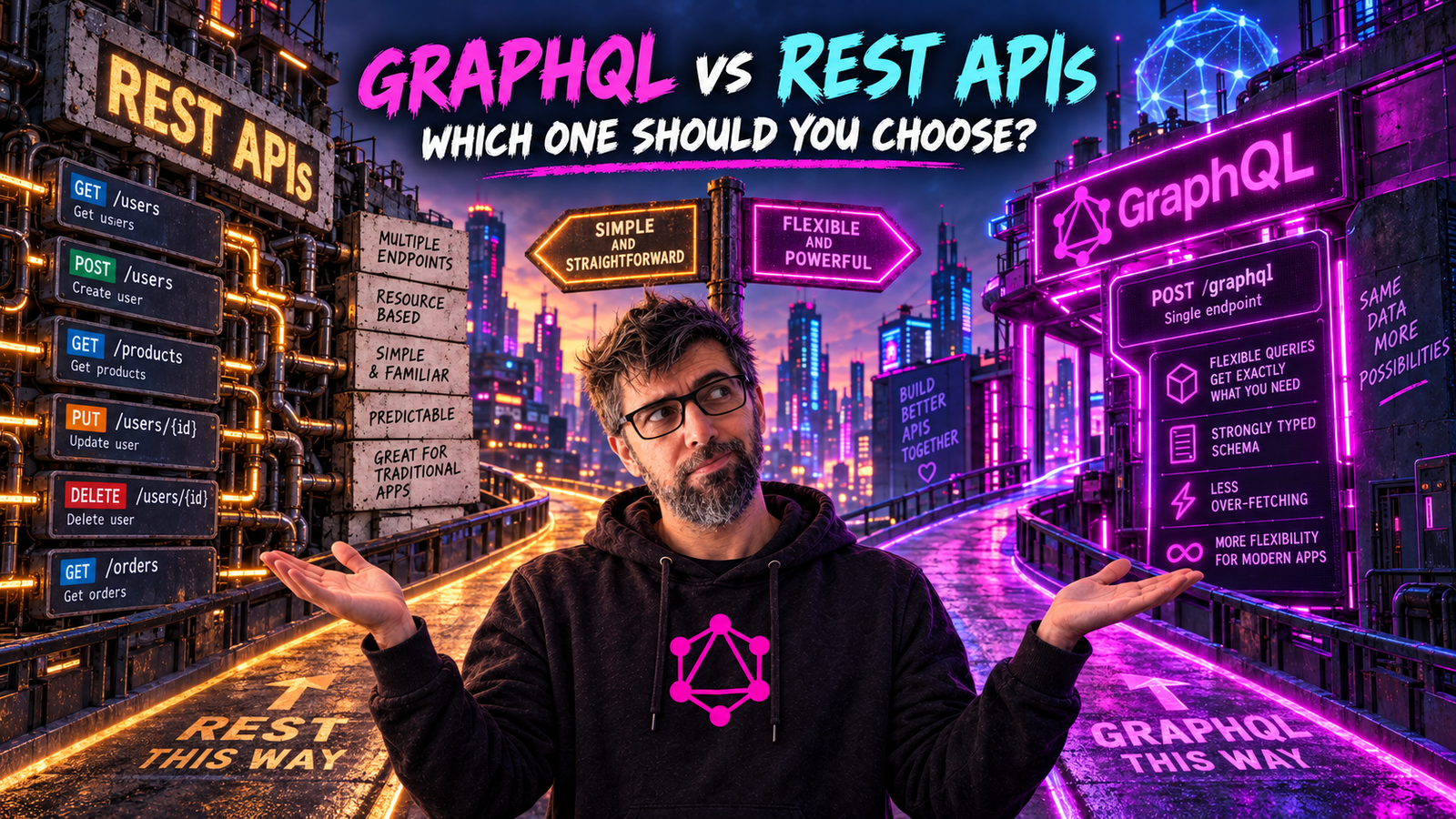
A comparison of REST and GraphQL API approaches - understanding when to use each.
The Great API Debate
If you've been building web applications, you've likely encountered the REST vs GraphQL debate. Both are powerful approaches to building APIs, but they solve problems differently. Let's break down when each shines.
REST: The Battle-Tested Standard
REST (Representational State Transfer) has been the dominant API paradigm for over two decades. It's built around resources and HTTP methods:
GET    /users/123        → Fetch user
POST   /users            → Create user
PUT    /users/123        → Update user
DELETE /users/123        → Delete user
REST excels when:
- You have simple, resource-based data models
- Caching is critical (HTTP caching works out of the box)
- Your team is familiar with traditional HTTP semantics
- You're building public APIs with predictable access patterns
GraphQL: Precision Data Fetching
GraphQL flips the script. Instead of multiple endpoints, you have one endpoint and ask for exactly what you need:
query UserWithPosts {
  user(id: "123") {
    name
    email
    posts(last: 5) {
      title
      publishedAt
    }
  }
}
GraphQL excels when:
- You have complex, interconnected data
- Mobile apps need to minimize data transfer
- Frontend teams want autonomy from backend changes
- You're aggregating data from multiple sources
The Over-fetching Problem
Consider fetching a user profile with their recent posts. With REST:
GET /users/123           → Returns ALL user fields
GET /users/123/posts     → Returns ALL post fields
GET /users/123/followers → Returns ALL follower data
That's 3 round trips and potentially megabytes of unused data. With GraphQL:
query UserProfile {
  user(id: "123") {
    name
    avatar
    posts(limit: 3) { title }
    followersCount
  }
}
One request. Only the fields you need.
When REST Still Wins
Don't count REST out. It's still the better choice for:
- File uploads - GraphQL's handling of binary data is awkward
- Simple CRUD apps - Why add complexity?
- Public APIs - REST's predictability makes documentation easier
- Caching-heavy applications - HTTP caching is mature and well-understood
The Verdict
There's no universal winner. Many successful companies use both:
- GitHub runs a GraphQL API and a REST API side by side, and documents both as first-class (the old v3/v4 version labels have been dropped)
- Shopify built a comprehensive GraphQL Admin API and is winding down its REST Admin API (REST became a legacy API in 2024, and new public apps must build on GraphQL)
- Netflix uses GraphQL for their internal microservices
My recommendation: Start with REST for simple projects. Consider GraphQL when you find yourself creating custom endpoints for specific UI needs, or when mobile performance becomes critical.
The best API is the one your team can build, maintain, and evolve effectively.
This post works like a REST endpoint: everyone who opens it gets every paragraph, including readers who only wanted the verdict.